Lago Mar HOA: What Optional Dues Really Mean for Buyers
September 17, 2026
September 17, 2026
A buyer touring Lago Mar for the first time usually asks the same question every Virginia Beach buyer asks about an established, mature-tree neighborhood: what's the HOA fee? The honest answer is that there isn't one, at least not in the sense most buyers mean. Lago Mar has a Civic League, not a homeowners' association, and the difference between those two words is the actual story here.
An HOA fee is attached to the deed. You pay it because a recorded covenant says you must, and if you don't, the association can place a lien. A civic league membership is a choice. In Lago Mar it currently costs $115 a year, according to the league's own recent letter to residents, though other league materials have listed the figure closer to $120. Either way, it's optional. Nobody enforces it. And that distinction, which sounds like a technicality, turns out to explain a lot about what a buyer is actually inheriting when they close on a house here.
The dues themselves aren't the story. The participation rate is.
According to the Civic League president's own letter to members, only 237 households currently pay annual dues, which the league puts at roughly 25 percent of the community. That's down from a historical range of 35 to 40 percent participation in years past. The league has been direct about what that drop means in practice: a real budget shortfall, one significant enough that the board sent members a survey asking which services to keep funding and which to temporarily suspend.
This is the piece that doesn't show up on a listing sheet. A buyer comparing Lago Mar to a newer Virginia Beach subdivision with a mandatory, deed-recorded HOA is comparing two fundamentally different funding models, even if both neighborhoods look equally manicured on a Saturday afternoon drive-through. One model guarantees the money regardless of who feels like paying. The other depends on roughly a quarter of the neighborhood covering costs that, historically, closer to a third or more of households used to share.
The league's letter breaks the budget down into specific, recurring costs, and they're worth listing because they show exactly what's riding on that participation rate:
That $16,000 figure covers food, non-alcoholic drinks, kids' activities, a DJ, and rented tents and facilities. A community sponsor covers the beer separately, so it doesn't touch the league's own budget. But everything else on that list, the entrance landscaping people notice when they turn onto Camino Real, the parade that gives the neighborhood its 4th of July identity, the fall gathering that replaced Oktoberfest, all of it runs on whatever a self-selected 25 percent of the community decides to fund that year.
None of this makes Lago Mar a worse place to buy. It makes it a differently structured one, and that's the part worth sitting with before writing an offer.
In a neighborhood with a mandatory, recorded HOA, a buyer can look at the association's budget and reasonably assume next year's entrance landscaping and community events will look like this year's, because the dues are compulsory and the board has predictable revenue to plan against. In Lago Mar, that same assumption doesn't hold as cleanly. The league itself has said, in writing to its own members, that current participation only covers some of what it used to fund at full strength. Whether next year's Fall Festival matches this year's, or whether hedge trimming happens once instead of twice, depends on whether participation holds at 25 percent, slips further, or recovers.
For a buyer, that means the neighborhood's visible polish is a snapshot of current voluntary effort, not a guaranteed baseline. It's worth asking, before writing an offer, what the most recent civic league letter says about the current budget year, not just what the listing photos show on the day of the tour.
Not everything that makes Lago Mar appealing runs through that voluntary budget, and the distinction is useful for a buyer trying to separate what's guaranteed from what's discretionary.
The physical geography is fixed regardless of participation. Lago Mar borders the Back Bay National Wildlife Refuge, and every fall and winter, thousands of tundra swans and snow geese move through the refuge along with a wide range of duck species, with waterfowl populations typically peaking in December and January according to the U.S. Fish and Wildlife Service. That migration happens whether or not the Civic League hits its fundraising target. The same is true of Hell's Point Golf Club at the southeast end of the neighborhood, an 18-hole course designed by Rees Jones that residents can reach in a short drive, and the local rule that permits golf carts on any street south of Nimmo Trail, a detail specific enough to this community that it shapes how a lot of residents actually get around on weekends.
The Nimmo Trail itself is worth a note of its own. There has long been a plan to extend the trail through the refuge to connect Lago Mar directly to Sandbridge Beach by bike or on foot. As of now, that extension remains a plan rather than a built connection, which is worth knowing if a buyer is drawn to the neighborhood partly on the promise of that link.
Community events sit somewhere in between fixed and fragile. Frosty in the Park, held the Saturday after the league's December annual meeting at Flip Flops VB Grill, is sponsored by Stroll magazine rather than funded out of core dues, and it collects unwrapped toys that go to CHKD. It's a genuinely nice tradition and one that has run consistently, but it exists because a sponsor and a set of volunteers keep choosing to run it, not because a mandatory fee guarantees it.
If Lago Mar is on your list, the practical move is simple: ask to see the Civic League's most recent communication to members, not just the listing agent's description of the neighborhood. The league's own letter is public enough to reference, and it tells you more about what you're buying into than a portal's generic amenity list ever will. Ask what participation looks like this year, whether the entrance landscaping schedule has changed, and whether both flagship events are still fully funded.
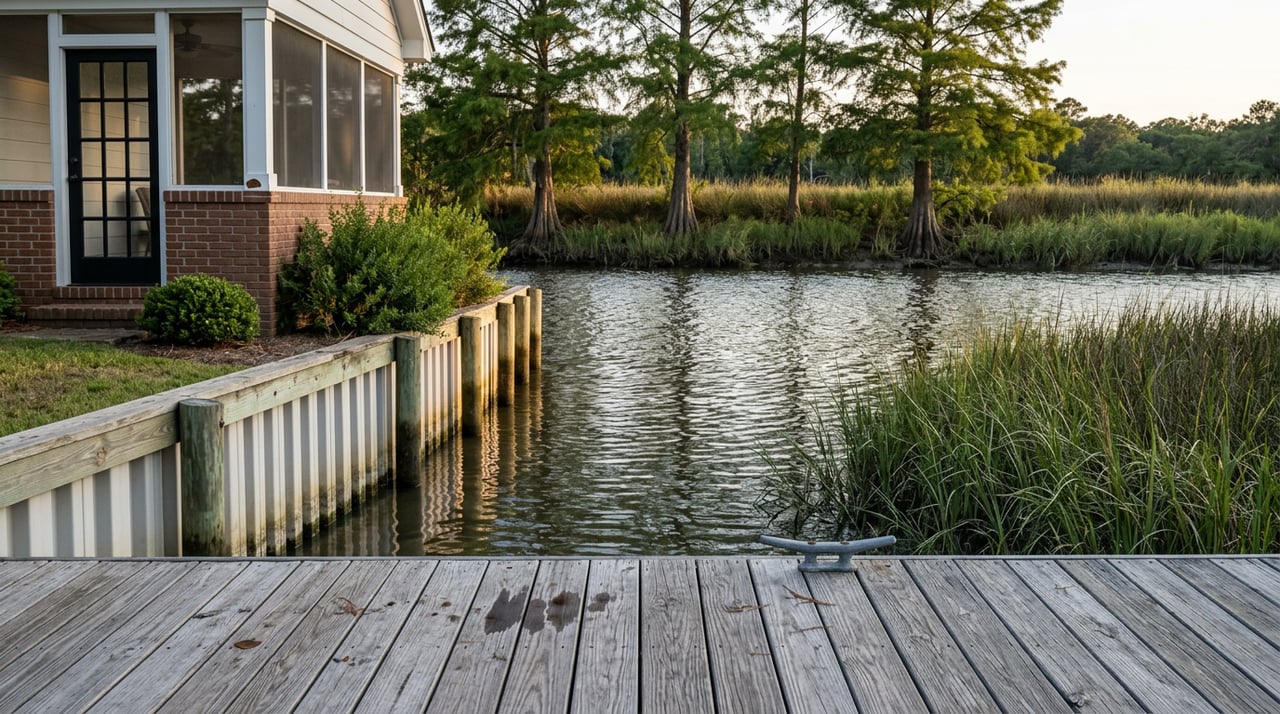
None of this should scare a buyer off a neighborhood with real advantages: canal access for some homes, three parks within its borders, a wildlife refuge at its doorstep, and a golf course a short drive away. It should just reframe what "HOA" means when the word shows up in a Lago Mar listing. It isn't a guarantee. It's a volunteer effort currently running at about a quarter strength, and understanding that gap is part of understanding what you're actually buying.
Is Lago Mar's Civic League membership required to buy a home there? No. Civic League dues in Lago Mar are voluntary, unlike a deed-recorded homeowners association. Membership isn't a condition of ownership, and it isn't enforced.
What do the dues currently fund? Based on the league's own recent letter to members, dues go toward grass cutting and hedge trimming at the two neighborhood entrances, plus the cost of running the 4th of July Parade & Picnic and the Fall Festival.
Does the golf cart rule apply everywhere in the neighborhood? No. Golf carts are permitted on streets south of Nimmo Trail. Buyers interested in that lifestyle detail should confirm which side of the trail a specific listing sits on.
If Lago Mar's mix of canals, refuge access, and voluntary community spirit fits what you're looking for, the team at 4 Oceans Real Estate Group can walk you through what a specific listing's location means for civic league participation, entrance upkeep, and everyday access to the water. Get your instant home valuation to see where your own search stands in today's market.
Stay up to date on the latest real estate trends.