Virginia Beach Tidal Access vs. Deep Water Guide
November 21, 2025
November 21, 2025
Shopping for waterfront in Virginia Beach and wondering if “tidal access” will work for your boating, or if you need “deep water”? When you own a boat, the difference affects when you can leave the dock, what size vessel you can keep, and long‑term resale. In this guide, you will learn the plain‑language difference, how tides, depths, and bridges shape access, how to decode listing language, and what to check from Ashville Park and Lago Mar to Great Neck. Let’s dive in.
Tidal access means your ability to get in and out depends on the tide cycle. You may have enough depth at high or mid tide but run out of water at low tide. That can work well for shallow‑draft boats if you plan your trips around tide windows.
Deep‑water access means there is year‑round depth, referenced to the tidal datum used on nautical charts, that safely supports larger recreational vessels and often commercial craft. These channels are naturally deep or maintained by dredging.
There is no universal number that defines “deep water.” For a small powerboat, 6 to 8 feet may be adequate. Larger yachts may need 10 to 15 feet or more. Always match any listing claim to your vessel’s draft, plus a safety margin, and confirm the route’s shallowest controlling depth.
Tides change your usable depth hour by hour. A property that looks great at high tide can be too shallow at low tide. Check a nearby tide station and plan transit times around the expected tide height. In narrow channels, tidal current also affects maneuvering and safety.
Charted depths are snapshots tied to a tidal datum, often Mean Lower Low Water. Shoaling can make real‑time depths less than the chart shows. Recent maintenance dredging by the U.S. Army Corps of Engineers or the city is a strong indicator of reliable depth. For confidence when you buy, the most reliable proof is a recent sounding or a professional hydrographic survey.
Fixed bridges can limit your air draft even when the water is deep. Vertical clearance is measured from the waterline to the underside of the bridge and changes with the tide. Compare your vessel’s air draft to the listed clearance at the relevant tide height. If there is an opening bridge on your route, confirm its schedule and whether it opens for recreational boats.
Short routes to an inlet with no fixed bridges make ocean access simpler. Properties on main rivers or the Intracoastal Waterway often have more reliable depth than homes on small creeks or lagoons. Closer to an inlet, expect deeper water but also stronger currents, shoaling, and more exposure to waves.
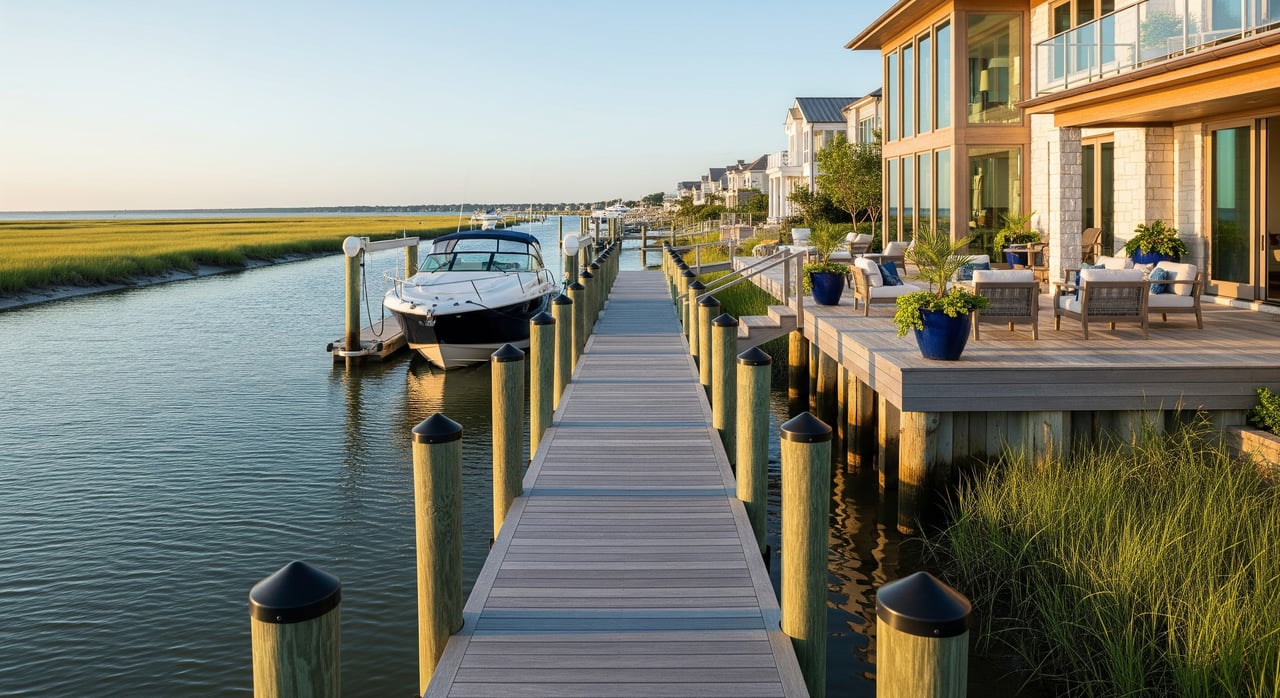
Dock and bulkhead condition, permitted pier length, and whether your canal is maintained all shape real access. Many coastal neighborhoods rely on periodic municipal or HOA dredging. Private dock owners may be responsible for maintaining their own slips. Confirm Virginia Marine Resources Commission permits for existing or planned structures.
Storms can shift shoals quickly and change controlling depths. Over years, sea‑level rise and shoreline change alter how often channels need dredging and how “deep water” performs. Plan for periodic verification rather than a one‑time check.
Homes near Rudee Inlet and Lynnhaven Inlet often provide the quickest ocean access. The tradeoff is that inlet conditions can change with shoaling and storms, so recent dredging status and local notices matter.
Many properties around Broad Bay and the Lynnhaven River, including areas in and around Great Neck, benefit from deeper channels and service from marinas and yacht clubs. Access can be year‑round depending on the exact lot, proximity to maintained channels, and bridge clearances on your route.
Interior canal and creek neighborhoods such as parts of Lago Mar and Ashville Park can be more tide‑dependent. Depths vary lot by lot, and many canals rely on HOA or municipal dredging to maintain access. Expect dock size limits and confirm the history of dredging before you commit.
Rudee Inlet and Lynnhaven Inlet are the primary gateways to the Atlantic for Virginia Beach boaters. Check recent dredging updates, bridge clearances on your route, and marina guidance for practical on‑the‑water insights. City public works and VMRC records help verify permits and maintenance plans.
Inlet and beach‑adjacent channels tend to shoal and need periodic dredging. A recent project can restore depth for a time, while gaps in maintenance usually lead to gradual loss of depth. Ask for dates, sponsors, and schedules for any dredging that serves your canal or channel.
You deserve clear, confident guidance on tides, depths, and real access. As Waterfront Experts, we align your vessel’s draft and air draft with the right properties, verify route constraints, and present waterfront homes with the premium marketing they deserve. Whether you are upgrading slips, right‑sizing boats, or listing a canal‑front home, we help you move with certainty.
Ready to make a smart waterfront move in Virginia Beach? Connect with the team at 4 Oceans Real Estate Group LLC for a consult, or get your instant home valuation.
Stay up to date on the latest real estate trends.