Selling A Yorktown Waterfront Home: Strategy And Timing
April 23, 2026
April 23, 2026
Wondering when and how to sell a waterfront home in Yorktown without leaving money on the table? If so, you are asking the right question, because waterfront sales often depend on more than square footage and curb appeal. In Yorktown, timing, presentation, shoreline condition, and documentation can all shape your result. Let’s dive in.
If you are selling a Yorktown waterfront home, it helps to start with the broader market. According to York County market data from Realtor.com, the county was considered a balanced market in February 2026, with 239 homes for sale, a median home price of $475,000, median days on market of 39, and a sales-to-list-price ratio of 100%.
Yorktown itself showed a median listing price of $493,335 and a median of 36 days on market in that same reporting. That is still an active market, but it is not the kind of environment where any waterfront property can skip preparation and still expect top dollar. In a balanced market, buyers tend to compare carefully and ask better questions.
A waterfront home can command strong interest, but not every waterfront setting delivers the same value. Research summarized by The Appraisal Journal shows that premiums often depend on the quality of the view and the type of water exposure, not just whether a property is technically on the water.
That matters in Yorktown because buyers may look beyond the word waterfront and focus on what daily life there actually feels like. Is the view wide and open? Is the shoreline stable? Is the dock usable? Can buyers easily understand what they are getting? Those details often shape both demand and pricing.
When buyers tour a Yorktown waterfront home, they are often evaluating the full water experience. They may care about visibility from main living spaces, outdoor enjoyment, dock access, and how easy it is to maintain the property over time.
That means your strategy should highlight practical value, not just marketing language. Clear photos, strong staging, and a thoughtful description should help buyers picture the home in use. For waterfront homes, lifestyle presentation works best when it is backed by real property facts.
One of the biggest mistakes waterfront sellers can make is pricing from emotion or from a broad coastal narrative. In Yorktown, the better approach is to price against the current local market and then adjust for the specific features that make your property stronger or weaker than nearby options.
A premium price is easier to support when the home shows well, the shoreline features are in good condition, and your paperwork is organized. If buyers see uncertainty around flood exposure, permits, or deferred maintenance, they may hesitate or negotiate harder. Precise pricing and clean preparation usually work together.
For many sellers, spring and early summer offer the strongest listing window. The National Association of Realtors seasonality analysis notes that the peak buying season tends to run from April through June, with faster market times than the winter months.
That seasonal trend can be especially helpful for waterfront homes. In spring and early summer, water views are easier to appreciate, landscaping usually looks better, and docks and outdoor spaces are more inviting. Buyers can more easily imagine boating, entertaining, or simply enjoying the setting.
A spring or early-summer launch is often ideal if your home is truly ready. That means repairs are complete, documents are gathered, and your photos reflect the property at its best.
If you rush to market before the home is prepared, you may miss the very advantage that spring offers. The goal is not just to list during a popular season. The goal is to launch when buyer demand and property presentation are both working in your favor.
If you need to list in fall or winter, you can still succeed. According to NAR’s seasonal perspective, winter usually brings fewer buyers, but those buyers are often serious and ready to act.
In that setting, your strategy needs to be tighter. Pricing should be realistic, condition should be strong, and your documentation should remove as much uncertainty as possible. In a balanced market, a well-prepared winter listing can still stand out.
Flood risk is not just an insurance topic. It can affect how buyers value the property and how comfortable they feel moving forward.
York County provides resources for floodplain and flood insurance information, including flood-zone checks, base flood elevation, elevation certificates, and Letters of Map Amendment. The county also notes that some homeowners are required to carry flood insurance and that Hampton Roads is especially susceptible to flooding and sea level rise.
Academic research cited in the York County source notes that flood-prone properties often sell at discounts compared with similar homes outside high-risk exposure, though water amenities can offset some of that effect in certain markets. For you as a seller, the takeaway is simple: buyers will likely weigh both the benefit of the waterfront setting and the risk profile.
That is why it helps to gather flood-zone records, elevation certificates, or a LOMA if one applies to your property before you go live. Clear records can reduce guesswork and help buyers make decisions with more confidence.
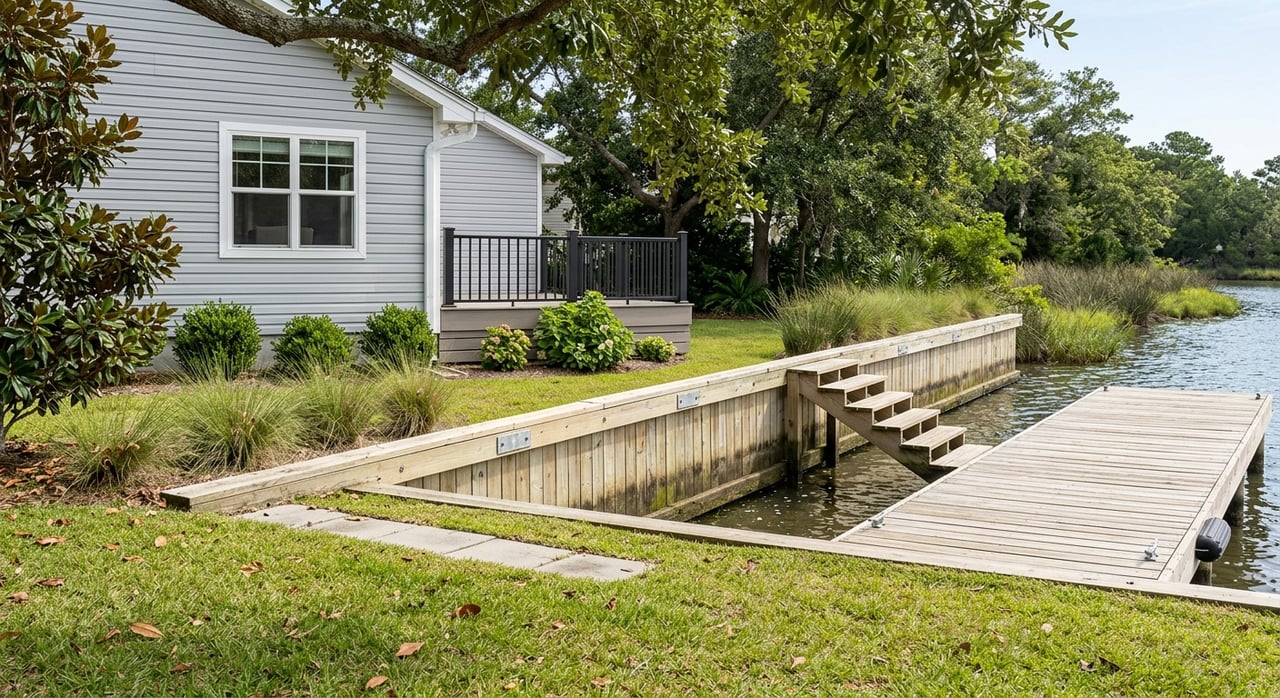
In waterfront sales, docks, bulkheads, revetments, and other shoreline improvements can be major value drivers. They can also become major due diligence questions if the condition or permit history is unclear.
York County explains on its Wetlands Board page that activities such as riprap revetments, bulkheads, dredging, marsh toe stabilizations, piers, boathouses, boat ramps, moorings, and related shoreline work may require wetlands or joint-permit review. If your property includes any of these features, buyers will often want to know what was done, when it was done, and whether permits were obtained.
Many sellers assume a standard home inspection will fully cover waterfront features. That is not always the case.
The InterNACHI dock inspection standard explains that inspections are generally limited to readily visible above-water components and do not include underwater elements, hidden defects, or life expectancy. In other words, if your marketing relies on a dock or shoreline structure, you should not assume those features are fully addressed by a basic home inspection alone.
Older waterfront homes often age differently than inland homes. The American Society of Home Inspectors points to common issues such as flooding, erosion, settlement, moisture intrusion, mold, condensation, rusted hardware, salt and UV damage, and pest or vacancy-related deterioration.
That does not mean your home will have major problems. It does mean buyers may look more carefully at exterior materials, crawlspaces, windows, connectors, and waterfront improvements. Taking care of visible issues before listing can strengthen both first impressions and negotiations.
A strong Yorktown waterfront selling plan usually starts before photography and pricing. It helps to organize the practical side of the sale first so your home can hit the market with fewer surprises.
A simple roadmap may look like this:
Yorktown waterfront homes often appeal to more than one buyer type. Some buyers are drawn to boating, water access, and the setting itself. Others, especially relocating buyers, may care just as much about clarity, documentation, and a smooth closing process.
Your listing should speak to both groups. Lifestyle buyers want to see the experience. Relocating buyers want to understand the facts. The strongest marketing combines premium presentation with straightforward information.
In a balanced market, visuals and positioning can make a major difference. Clean staging, professional photography, and a listing story that explains the home clearly can help buyers connect faster and perceive stronger value.
That is where a waterfront-focused strategy matters. A home near the water should not be marketed like a generic suburban listing. It needs presentation that captures the view, the shoreline features, and the practical details that serious buyers want to understand.
Selling a Yorktown waterfront home is usually about more than waiting for the right buyer. It is about preparing early, documenting thoroughly, pricing carefully, and launching when the home can show at its best.
If you want expert help positioning your waterfront property for today’s market, connect with 4 Oceans Real Estate Group LLC. Their waterfront-focused approach, premium marketing, and local knowledge can help you build a smart plan from day one.
Stay up to date on the latest real estate trends.